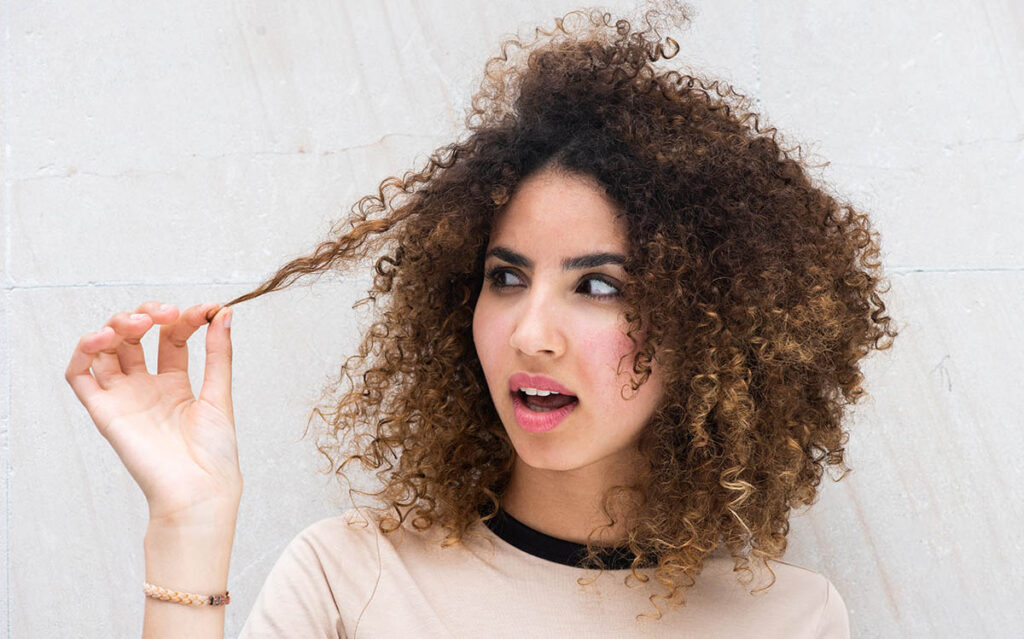
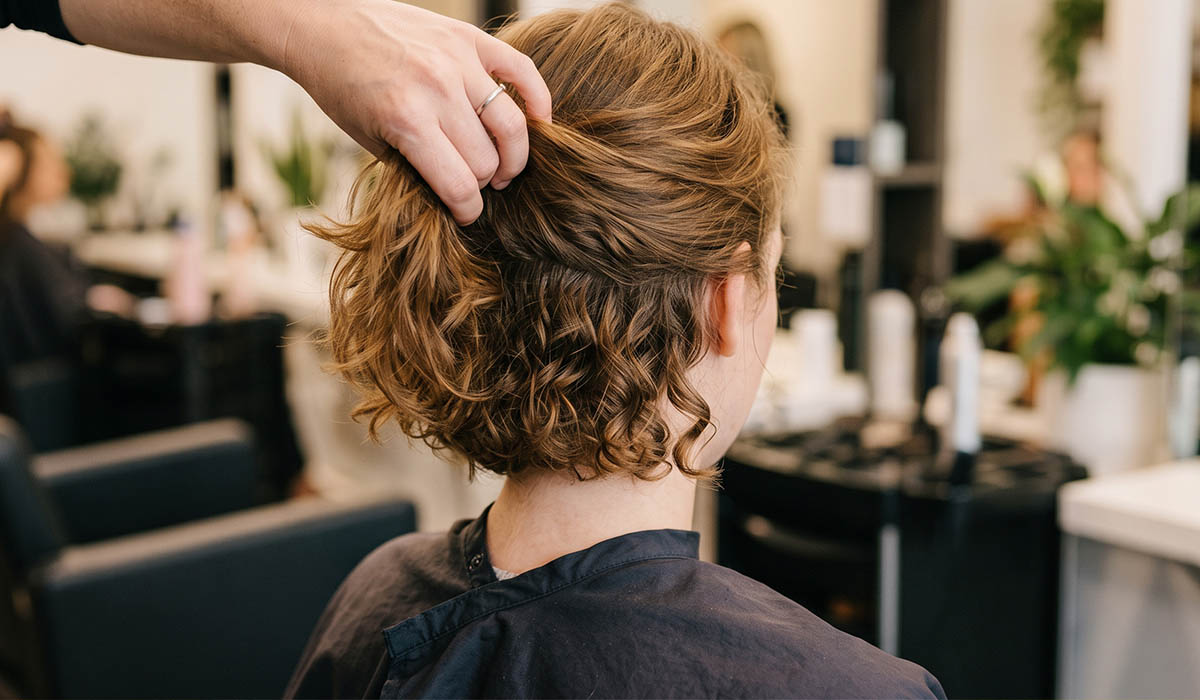
Curly at the nape but straighter near the crown puzzles plenty of people the first time they notice it. Temperatures above 150°C alter the internal keratin structure of a strand.1 That alone explains part of why hair is curly underneath but straight on top for so many people. The rest sits in scalp biology, gravity, and daily habits that touch some sections more than others, none of which points to damage on its own.
What Causes Different Curl Patterns on the Same Head
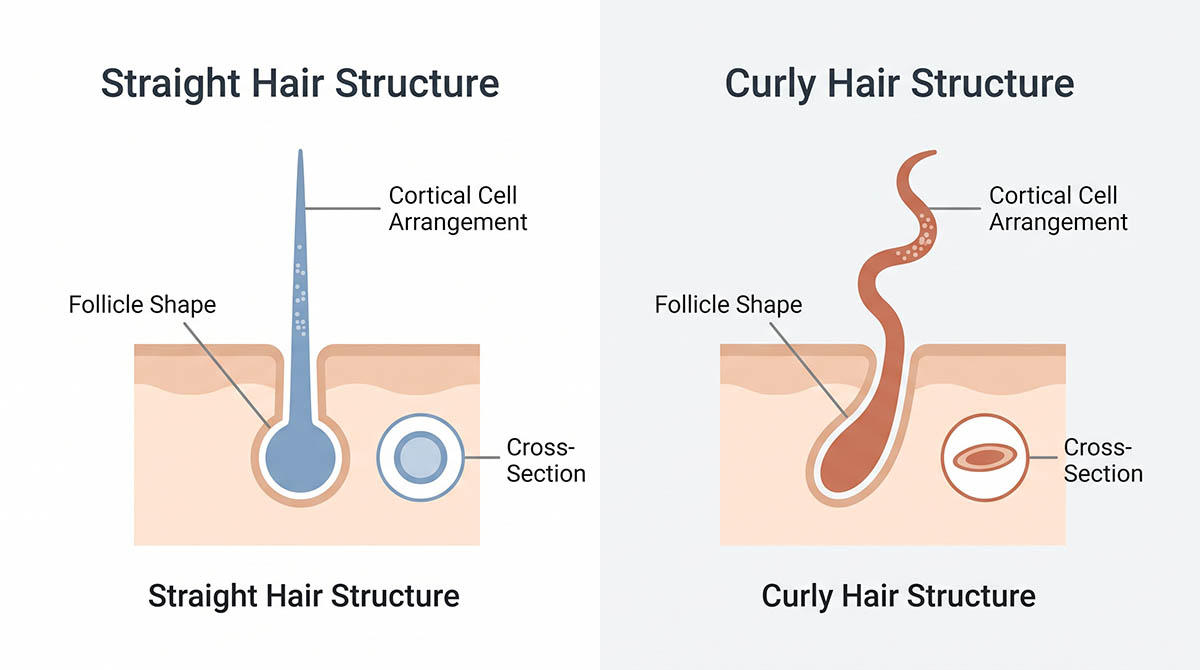
Every hair follicle has its own shape, which decides how a strand grows from the scalp. Round, symmetrical follicles produce strands with a circular cross-section that sit straight, while curved or oval follicles push out flattened, ribbon-like strands that bend into waves or coils. Genetic markers such as EDAR, FGFR2, and KRT71 control follicle curvature in localized patches, so one zone can grow coarse, wavy hair while the zone beside it grows fine and straight, with no external damage involved. Curl also depends on how cortical cells sit inside the strand, pulling even fibres straight and uneven ones into a curl. The table below shows the difference.
| Structural Feature | Straight Hair Profile | Curly Hair Profile |
| Follicle Shape | Round and symmetrical | Curved or oval, angled to the scalp |
| Cross-Section | Circular, high roundness | Flattened or ribbon-like |
| Cortical Cell Arrangement | Evenly distributed across the fibre | Unevenly distributed, creating tension |
Why Is Some of My Hair Wavy and Some Straight?
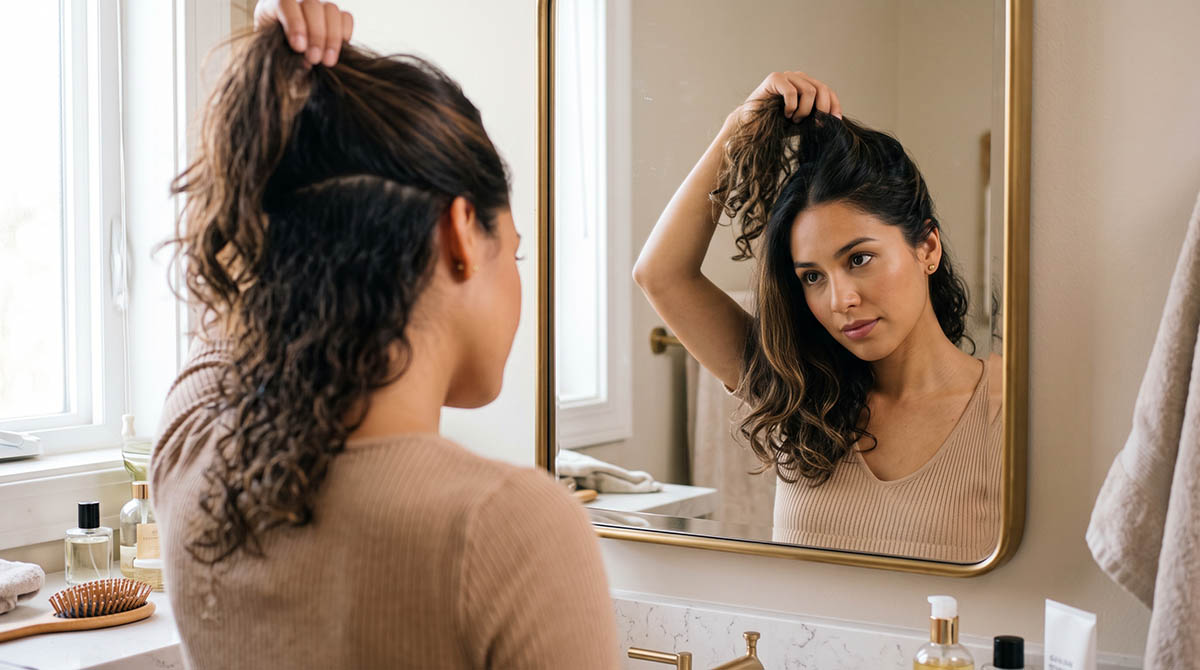
Genetics decide the starting shape of a follicle, but exposure decides how much of that shape shows on a given day. The top layer sits fully exposed to sun, heat tools, and constant handling, while hair underneath stays shielded. Frequent brushing and towel drying put noticeably more mechanical stress on the outer layer than on the hair hidden beneath, and that gap adds up over months.2
- Sun exposure: ultraviolet light breaks down the proteins that hold a curl in shape, and the top canopy takes the brunt of it while lower layers stay shaded.
- Heat styling: flat irons and blow dryers usually point at the visible top section rather than the layers underneath.
- Weight and gravity: longer top sections carry more mass, and that pull stretches a curl pattern looser over time.
- Friction: pillows, collars, and hands brushing past the crown wear down the cuticle faster than protected hair near the nape.
What Is It Called When Your Hair Is Curly on Top and Straight Underneath?
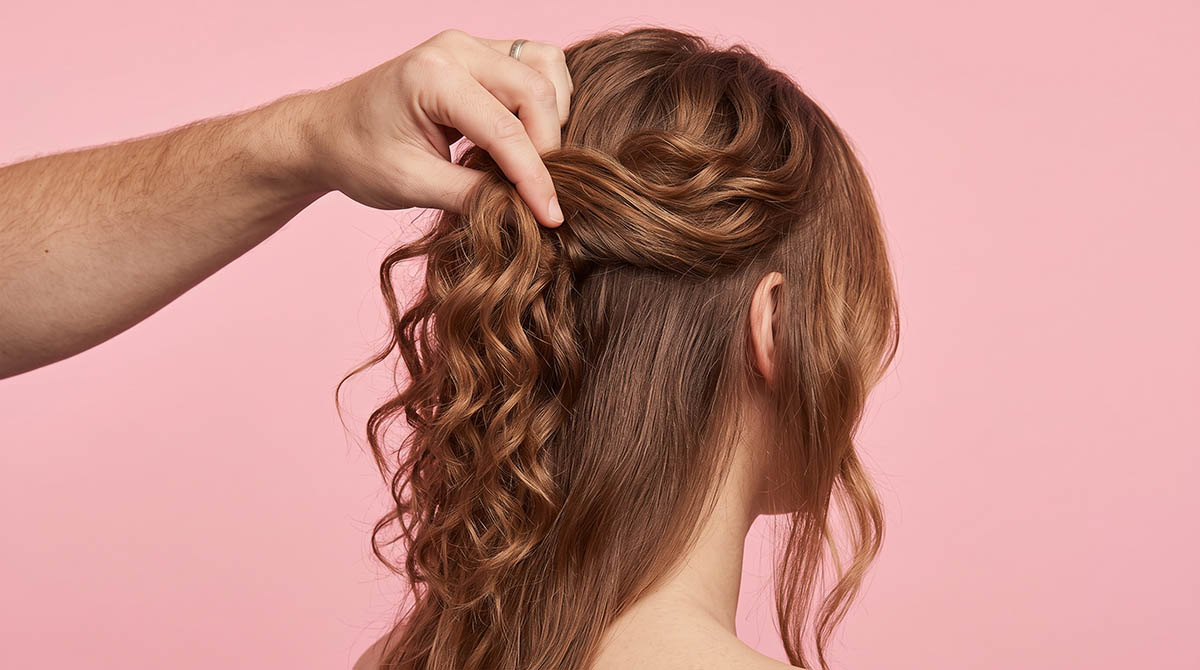
There is no official medical term for this pattern. Dermatology sources describe it as mixed or intra-individual texture variation, common across the population once someone looks at the scalp zone by zone rather than judging the whole head at once. The 1A through 4C labels used by product brands were built for shopping, not diagnosis, and were never meant to draw a hard line between sections of one head. A stylist trained in curly hairdressing can usually spot the pattern within minutes and catch early signs of damage a mirror alone will miss.
How to Style Curly and Straight Hair Mixed
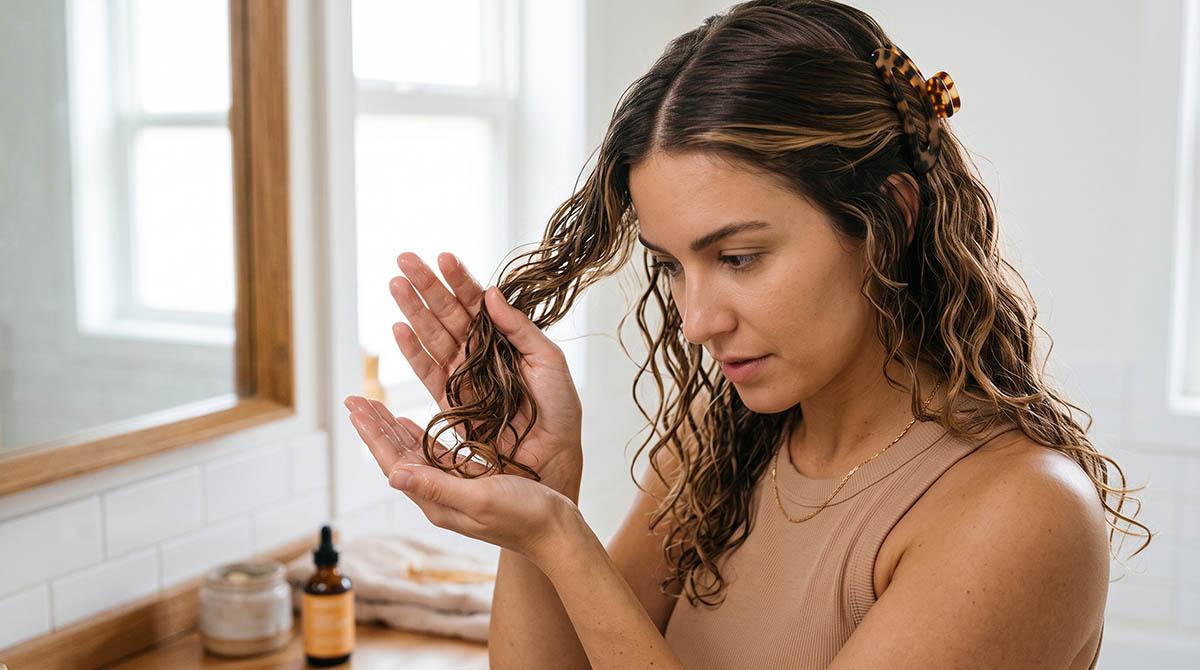
Blending two textures on one head comes down to product weight and technique. A few habits help:
- Use lighter products near the crown: heavy creams and oils weigh down looser waves, so save richer formulas for the curlier sections underneath.
- Scrunch upward on damp hair to support a curl as it sets.
- Diffuse on low heat: cupping sections while drying protects shape better than a nozzle pointed at the roots.
- Section before applying anything so product reaches the hair underneath instead of coating the top.
- Skip the brush once product is in, since combing dry, styled hair breaks curl clumps into frizz.
FAQs
How Do I Cut Hair That is Curly Underneath and Straight on Top?
Someone who works regularly with textured hair usually cuts each zone dry or on set, taking the curlier underneath sections a touch shorter than they look stretched and leaving extra length up top where weight already helps. Cutting blind with one length guide across the whole head is the fastest way to end up with a bottom-heavy shape that will not sit right once dry. A curl-focused stylist is worth the trip before trying to fix it at home.
How Do I Style Hair That is Curly Underneath and Straight on Top?
Treat it as two routines under one head. Apply curl cream or gel to the underneath sections while soaking wet, then let the top layer air dry with only a light styling cream so it does not go flat under something heavier. A diffuser on low heat keeps both sections looking intentional. Hairdressers with curly-specific training build routines exactly this way, working zone by zone.
How Do I Tell if Curly Hair is Unhealthy?
Frizz on its own is not proof of damage. Textured hair reacts to humidity by nature, and a bit of flyaway is normal even on healthy hair. Real warning signs are split ends, strands that snap under gentle stretching, a dull or straw-like feel, and curls that no longer spring back. When two or more show up together, it usually points to real structural damage, and an experienced curly hairdresser can tell the difference at a glance.
Final Thoughts
Two textures on one head is a normal outcome of scalp biology, not a flaw to correct. Follicle shape sets the starting point, and gravity, heat, sun, and daily handling decide how much of it shows on any given day. Chasing a uniform texture from root to root usually backfires, since the top and underneath sections carry different amounts of exposure to begin with.
How We Can Help
If you have curly hair underneath and straighter hair on top, a professional cut can help you work with both textures rather than trying to make them look identical. At The Curl Ambassadors, our stylists can assess how your hair behaves in different sections, recommend a cut that suits your natural texture, and share practical styling advice for managing the difference at home. Book a service at The Curl Ambassadors, such as the Dry-Cut CurlyTM Method, to get professional guidance for your unique curl pattern.
References
- Establishment of Heat‐Damaged Model for Hair – PMC – NIH, https://pmc.ncbi.nlm.nih.gov/articles/PMC12308778/
- 10 hair care habits that can damage your hair, https://www.aad.org/public/everyday-care/hair-scalp-care/hair/habits-that-damage-hair